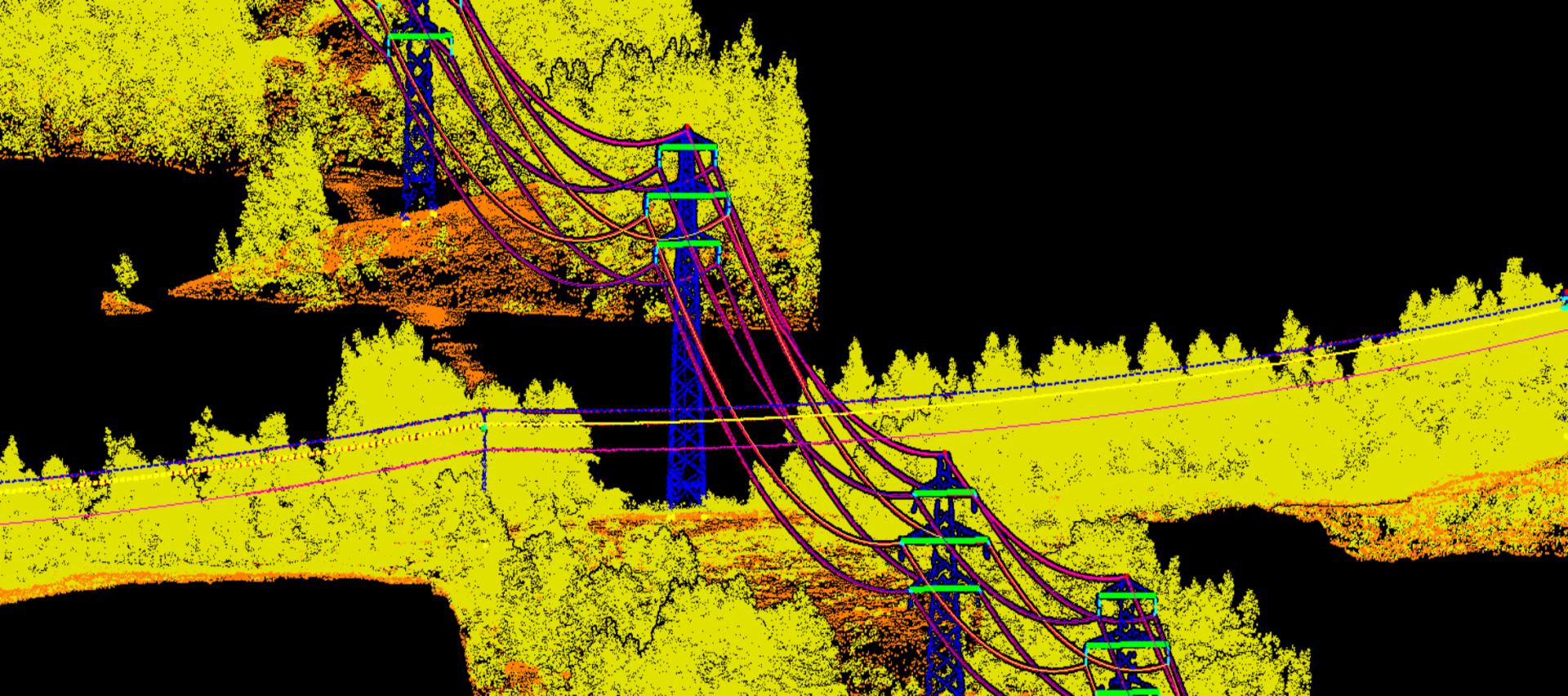
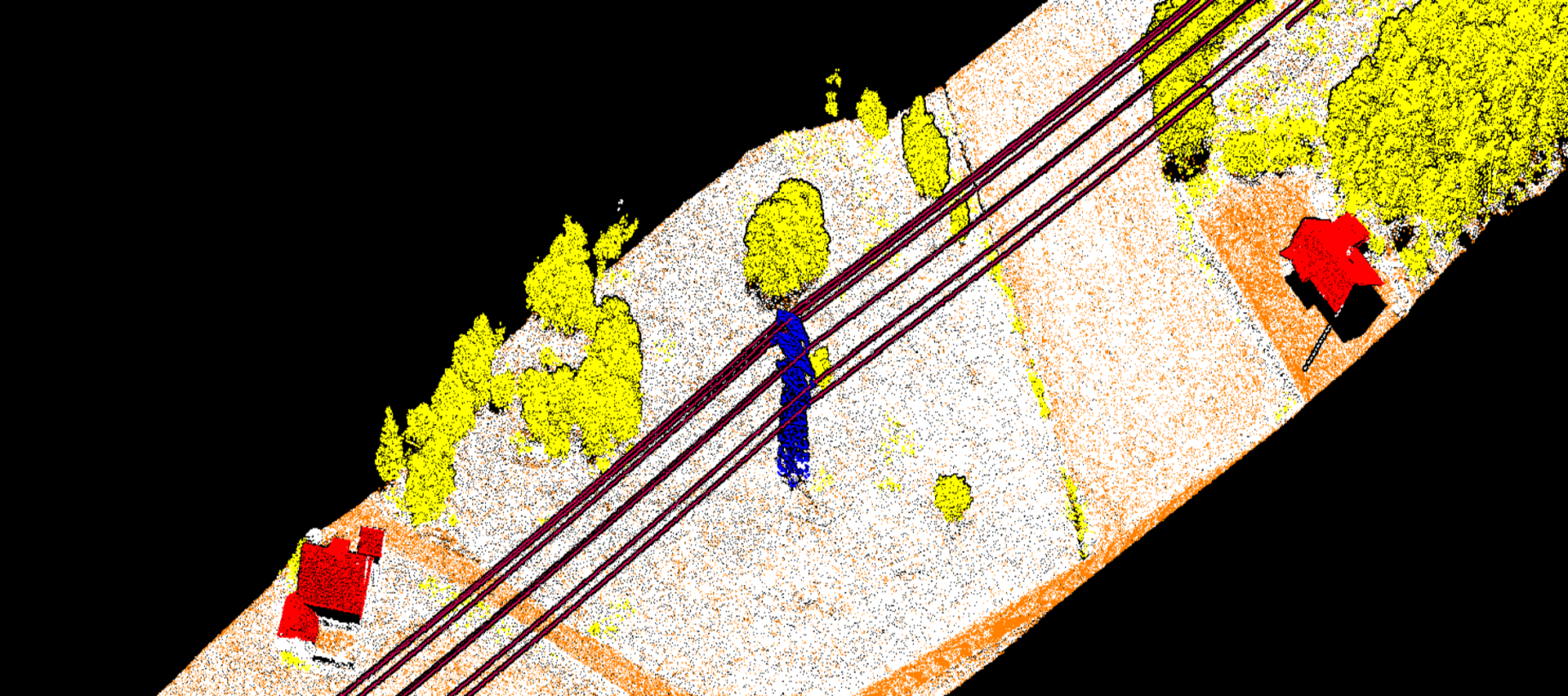
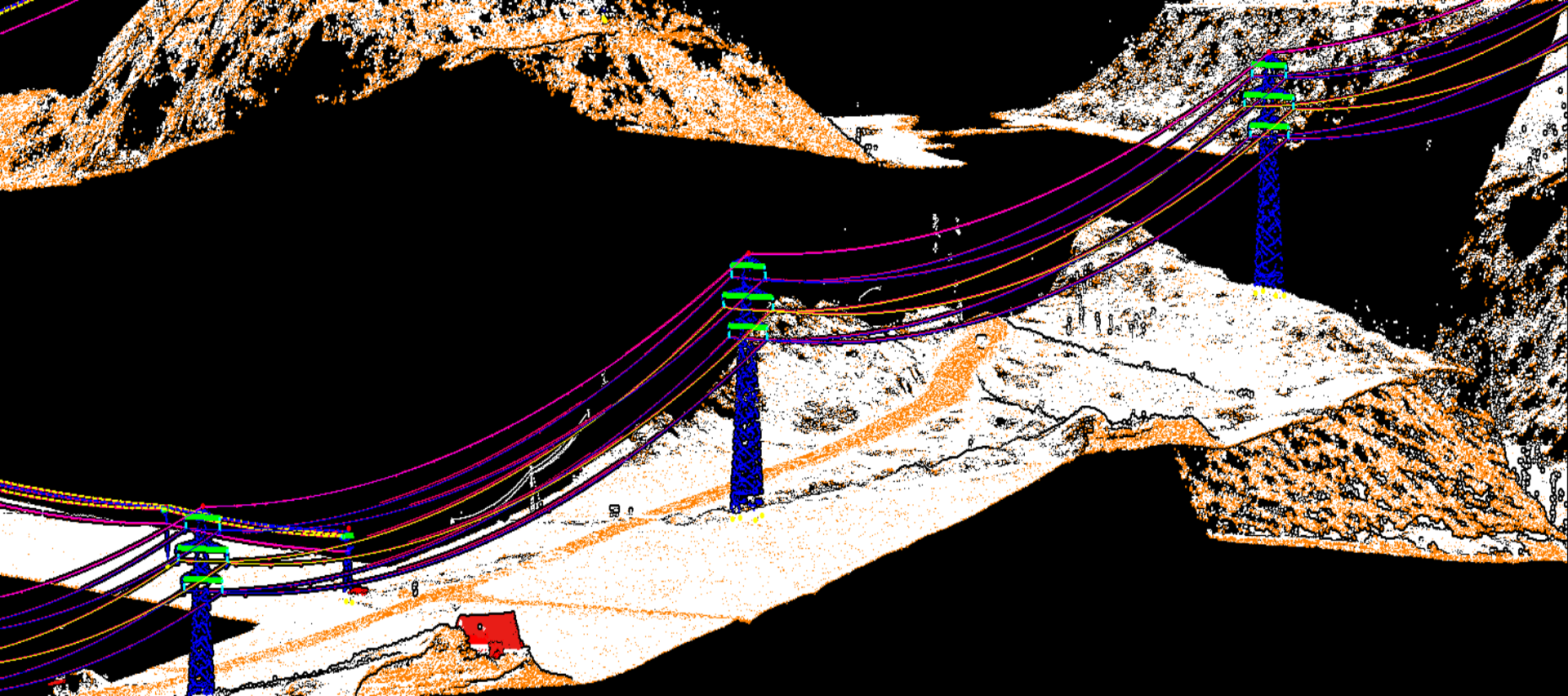
Object territory: Europe.
Average density of scanning: 157,27 points/m2
Performance specifics:
Classification:
1. Unclassified
2. Ground
4. Vegetation
6. Buildings
7. Low Points / Noise
14. Wire
15. Transmission Tower
19. Overhead Structure
Feature extraction(MV/HV):
1. Transmission Tower, Center Bottom
2. Transmission Tower, Center Top
3. Transmission Tower, Legs
4. Wires
-
- Phase
- Central cable
- Outer cable
- Neutral
- Phase
5. Crossarms
6. Isolator:
-
- Only for Phase
7. Guys
8. Transformer
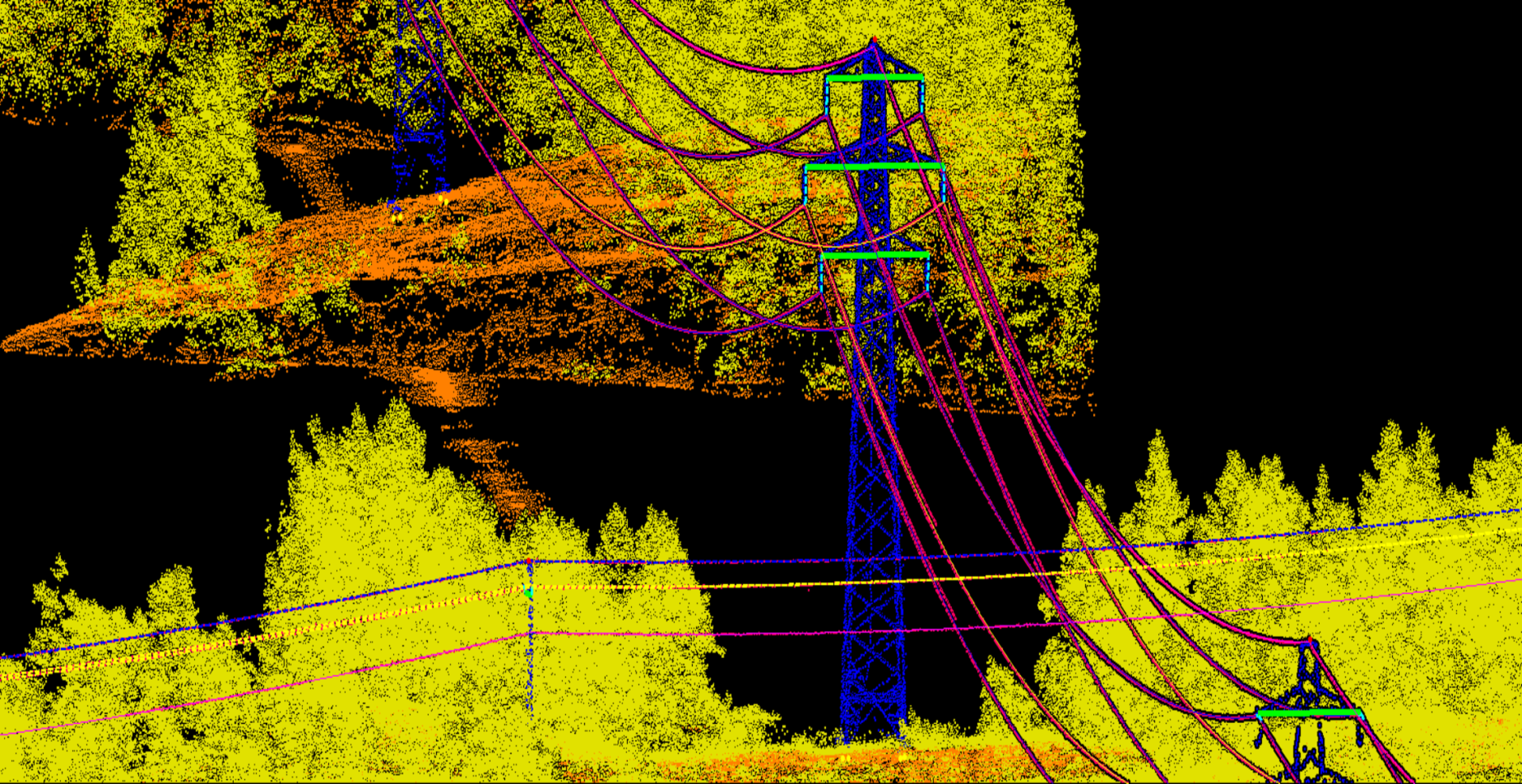
Problem and task.
- Data Source: UAV LiDAR scanning
- Input: Pre-classified point cloud
- Challenges & Tasks:
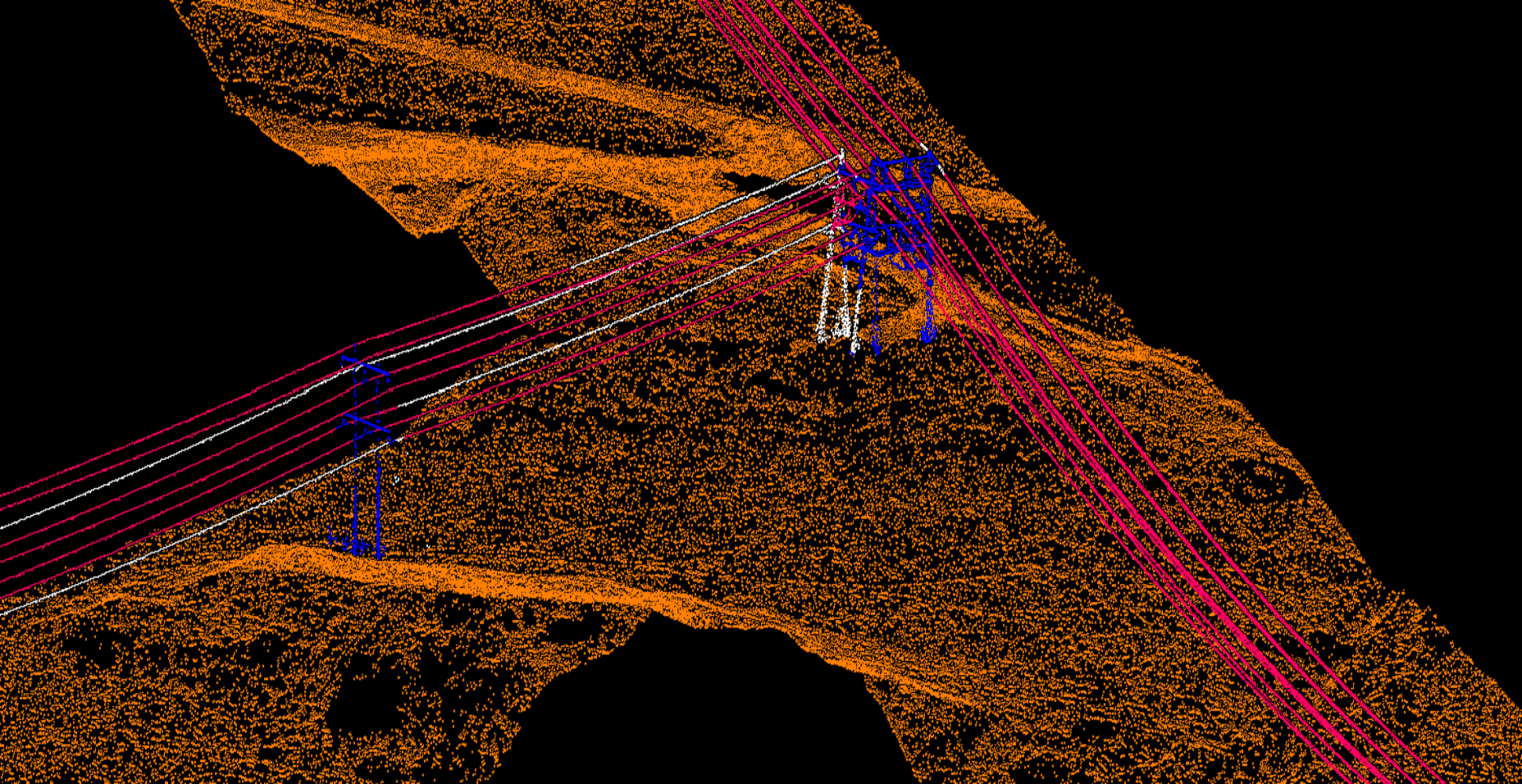
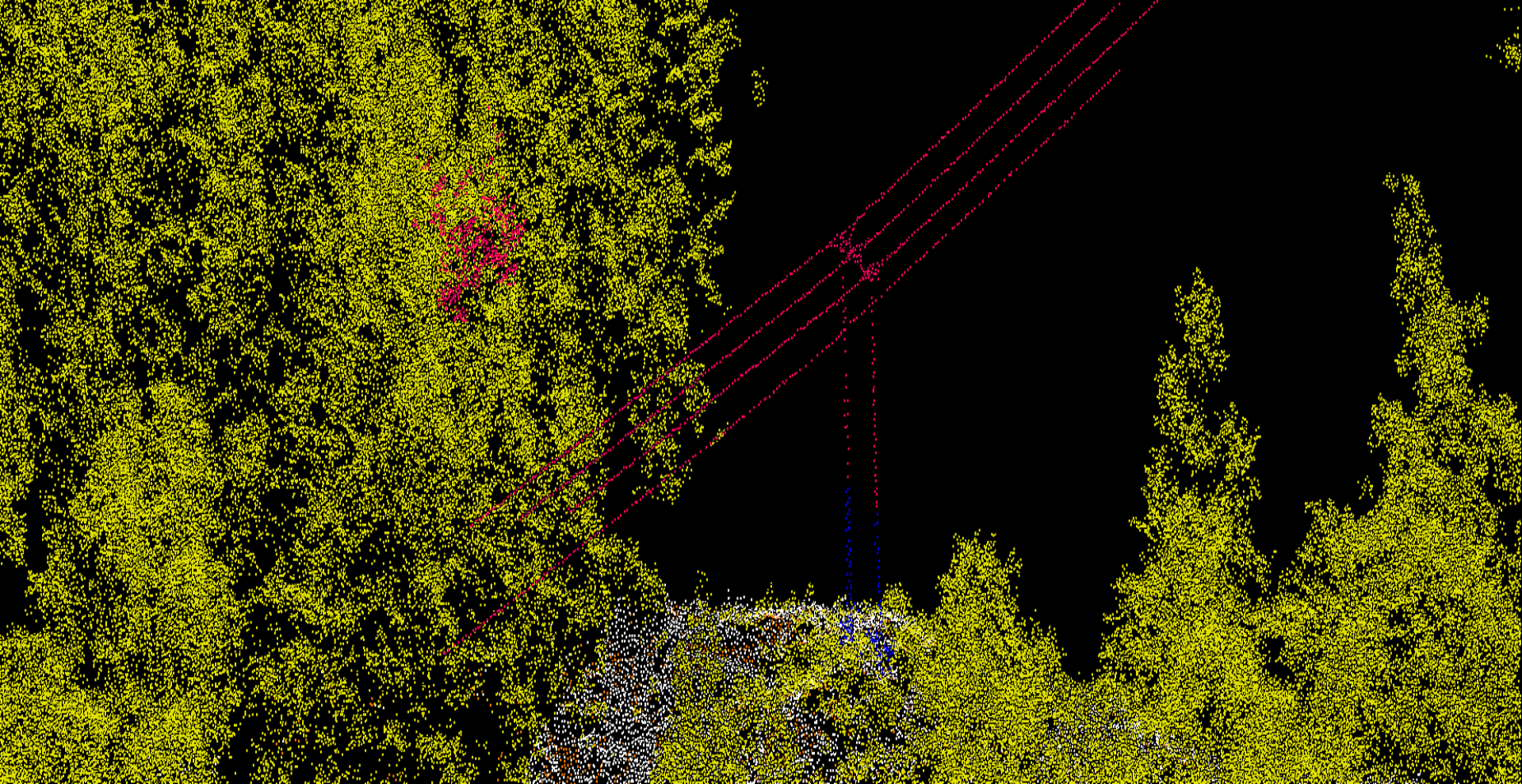
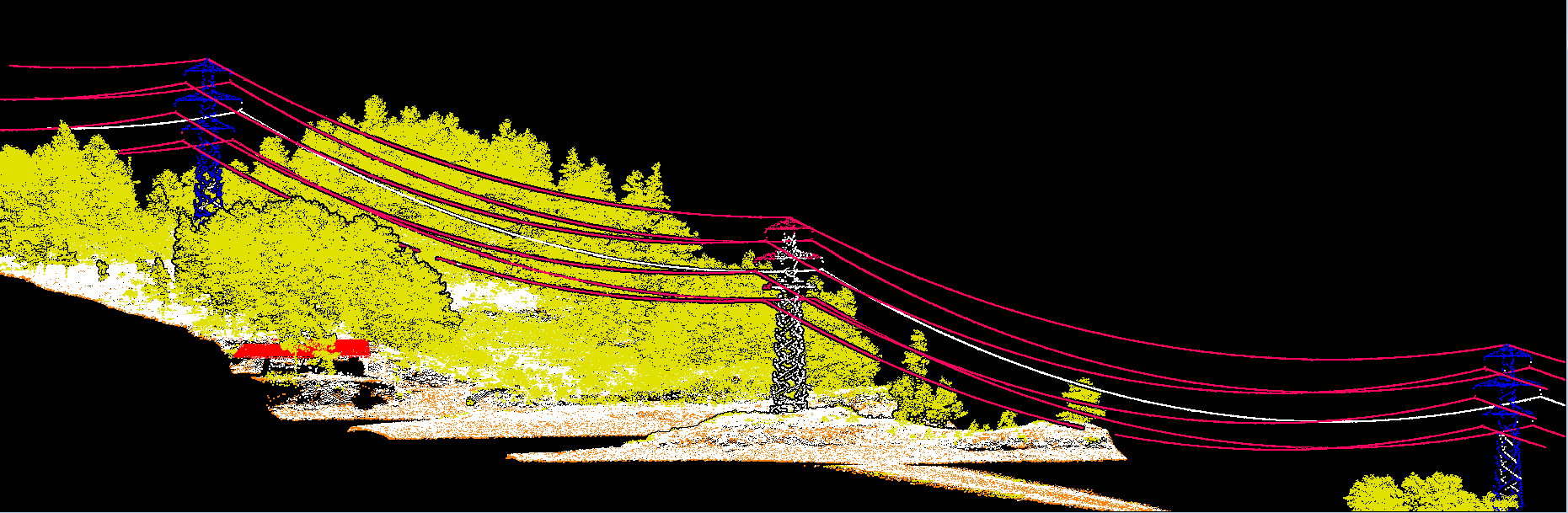
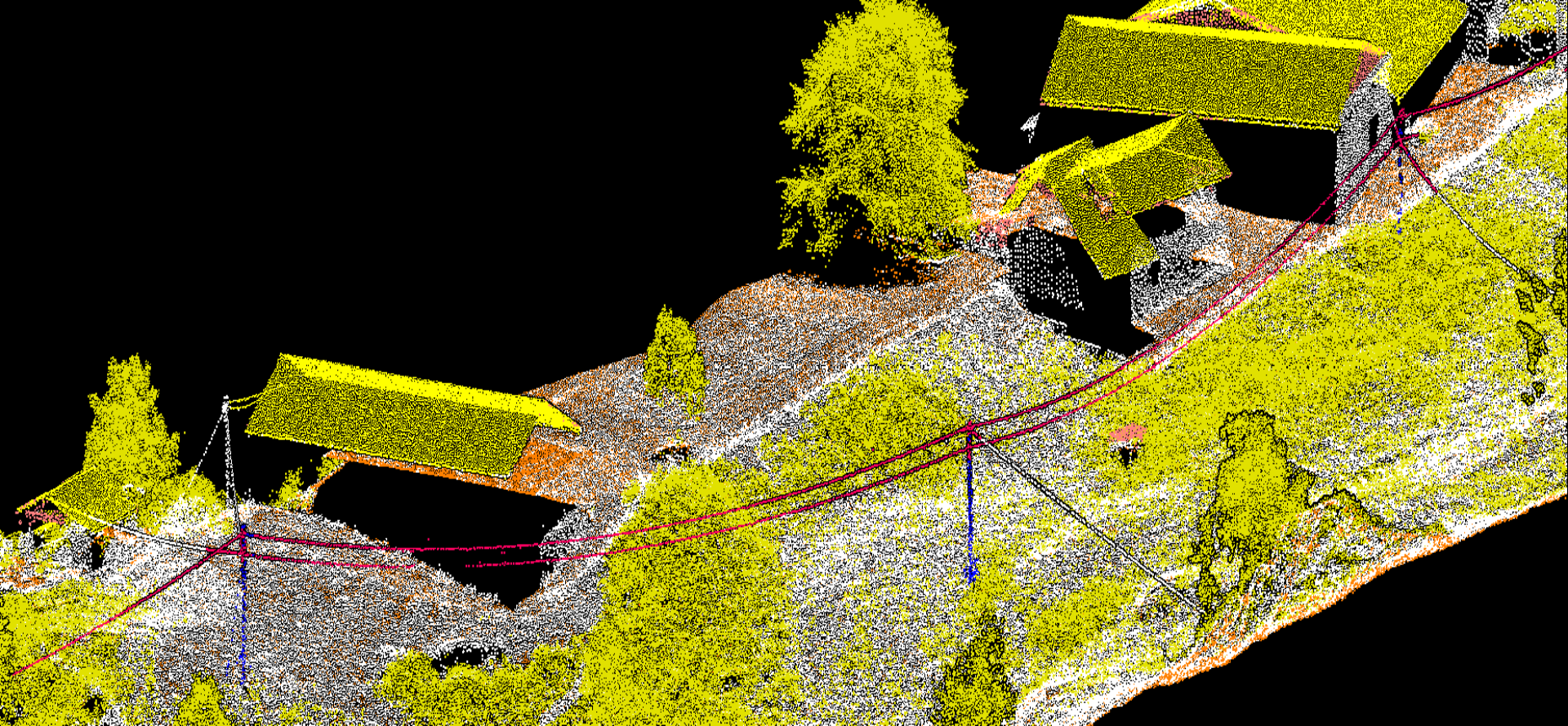
Goal. To classify power lines and other significant objects from a pre-classified point cloud and extract detailed features.
Challenges. Achieving a high-quality digital terrain model, precise classification of wires and poles, and comprehensive vectorization of electrical infrastructure components.
The main challenge that the client had is budget restriction yet the final data needed to be precise for Vegetation Management and Wire Inventory.




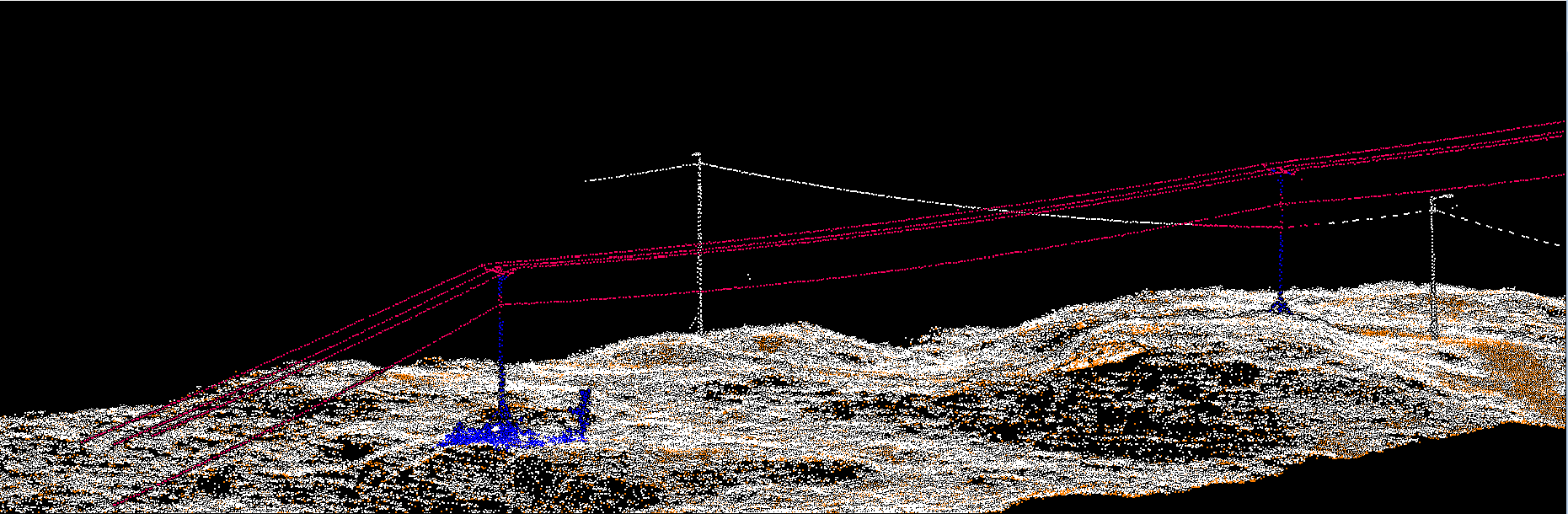


Realization.
Stages:
- One part of the team initially worked on vectorizing the wires themselves, while another handled the crossarms with bottom/top/legs pole points and guy wires.
- After that, we received consolidated data from the classification team and improved the quality of all objects in vectorization.
- The next step was to check the topology of the wires relative to each other and enhance it for perfect snapping of lines between each other.
- Then, one part of the team began installing insulators, as the crossarms and wires were already prepared, while another part delivered guy wires and transformers to the poles.
- After completion, we compiled the data into one file and, using our own scripts, divided the lines into central and external ones. The scripts don’t work 100% because we rely on the intersection of the central 3D line that we create from the point cloud and the buffer from the 2D line given at the start of the project, which almost always runs near the center. Therefore, this method requires refinement and manual checking. However, out of 3000 wires, only 20 are misclassified into the layer of central lines, so we consider this a success.
- Classification was completed in parallel with vectorization, and at this stage, the file was sent to the client.
Also, we provided another methodology for the LiDAR classification. Please check this case here.
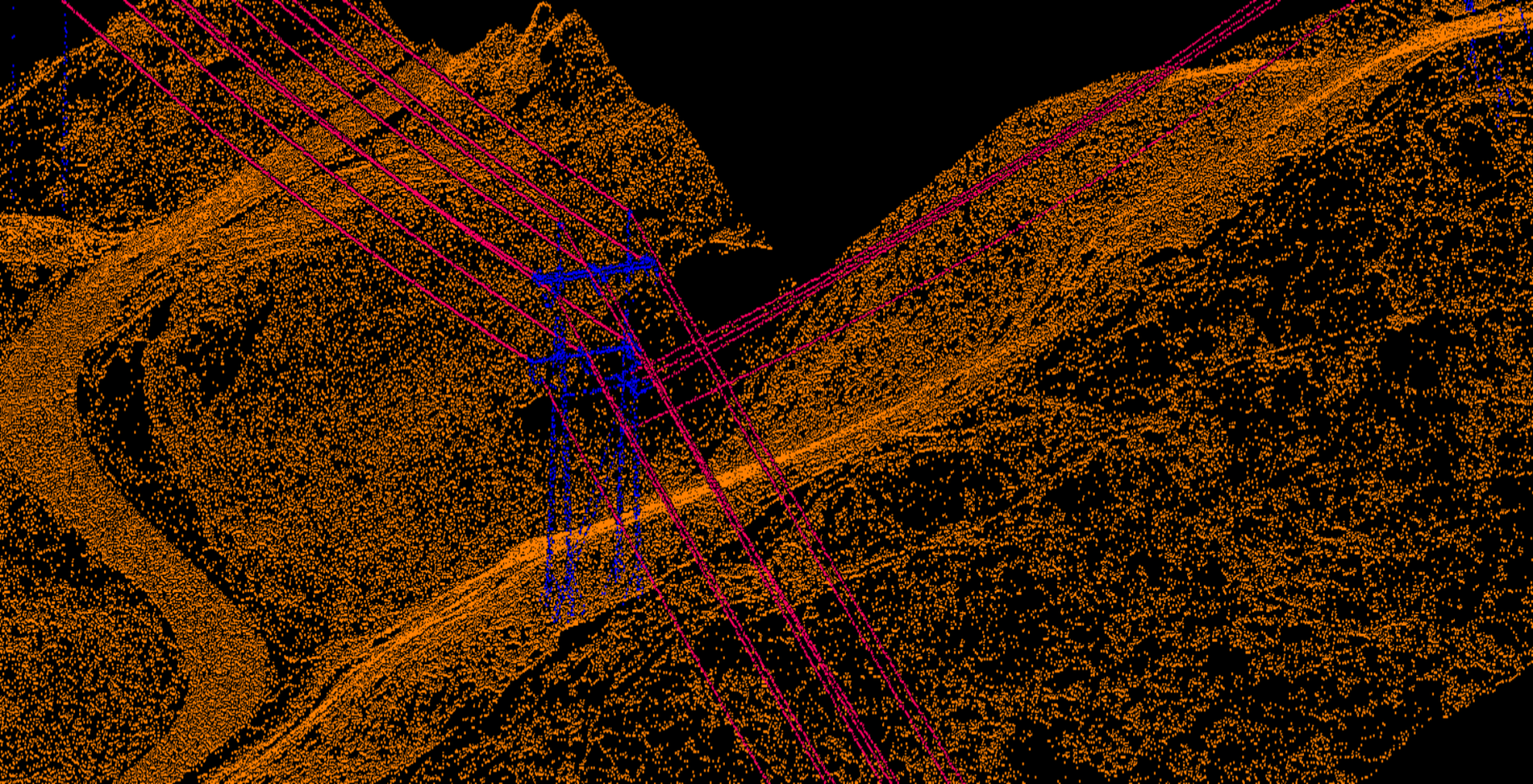

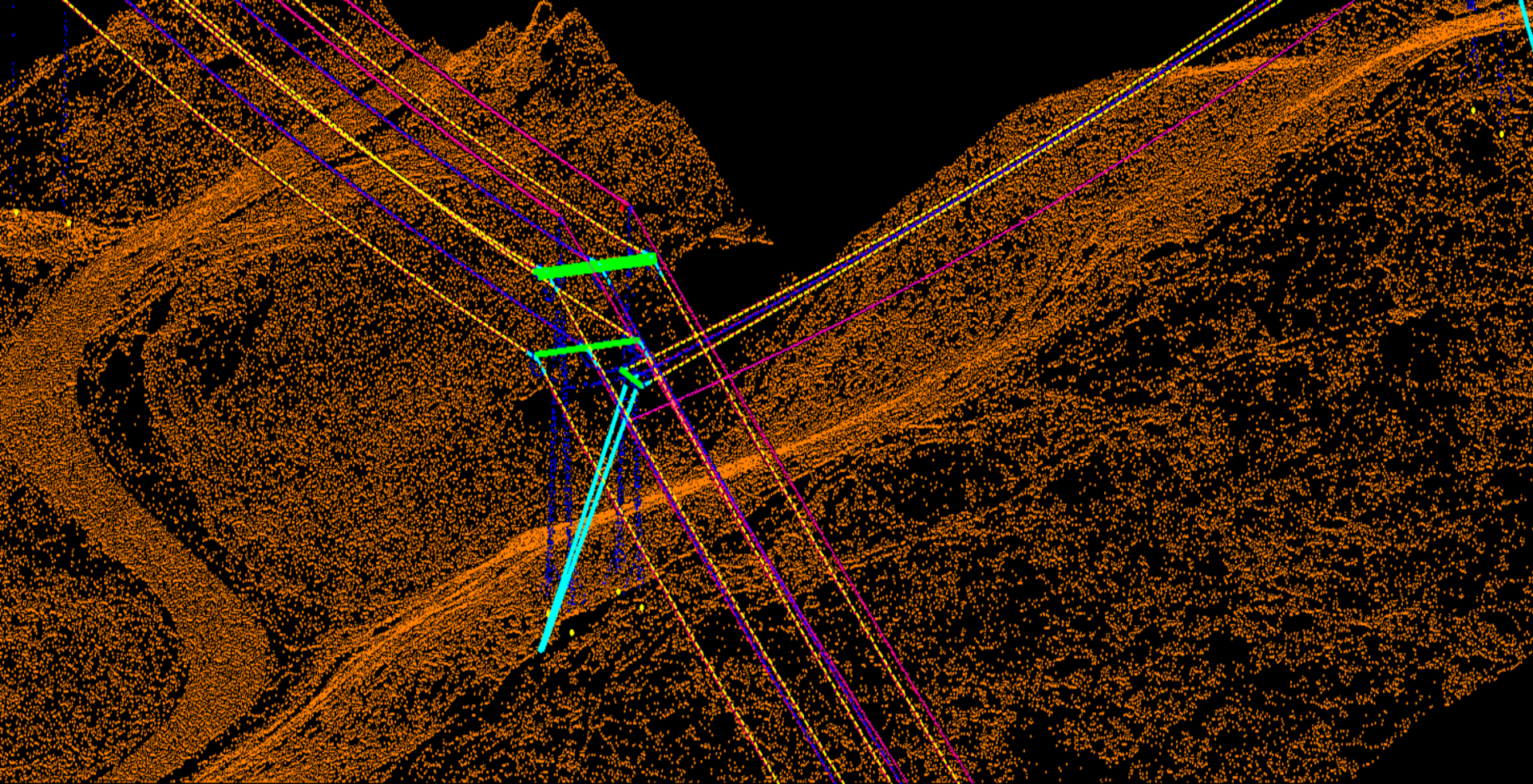

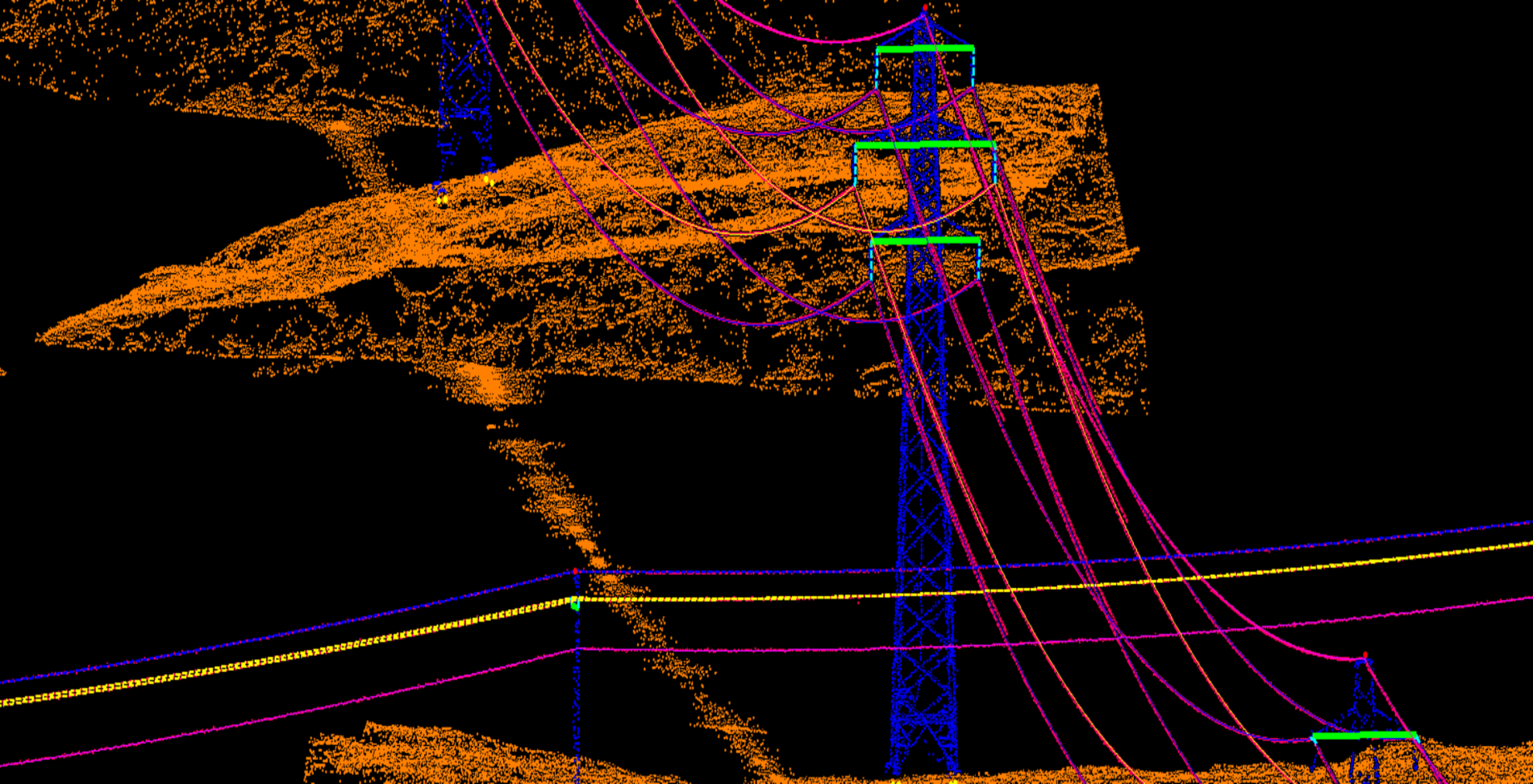
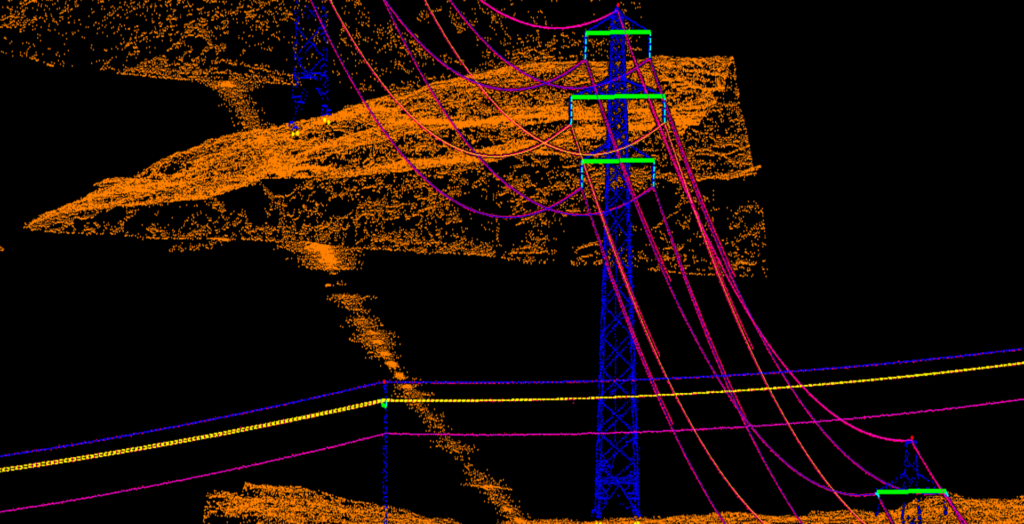
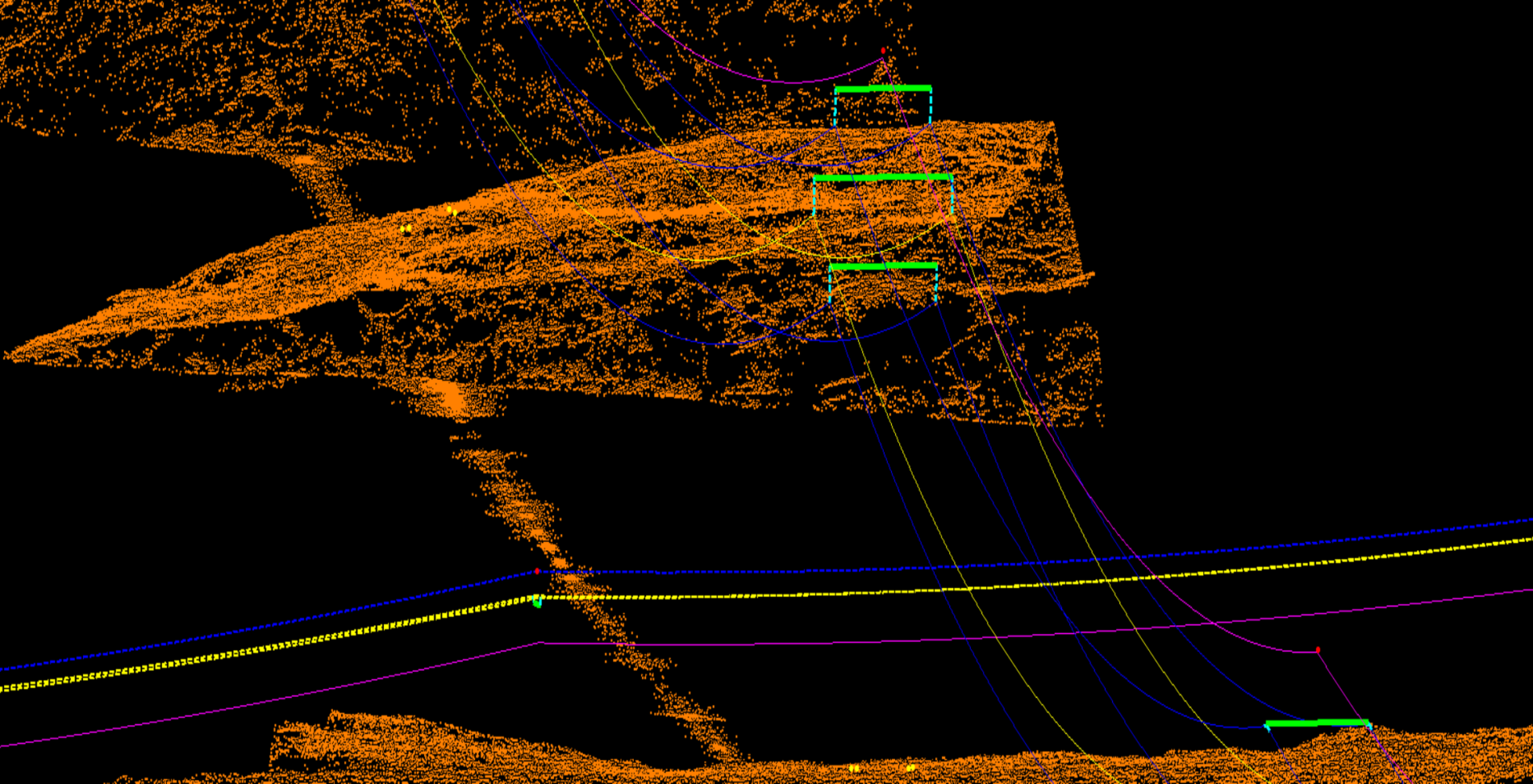

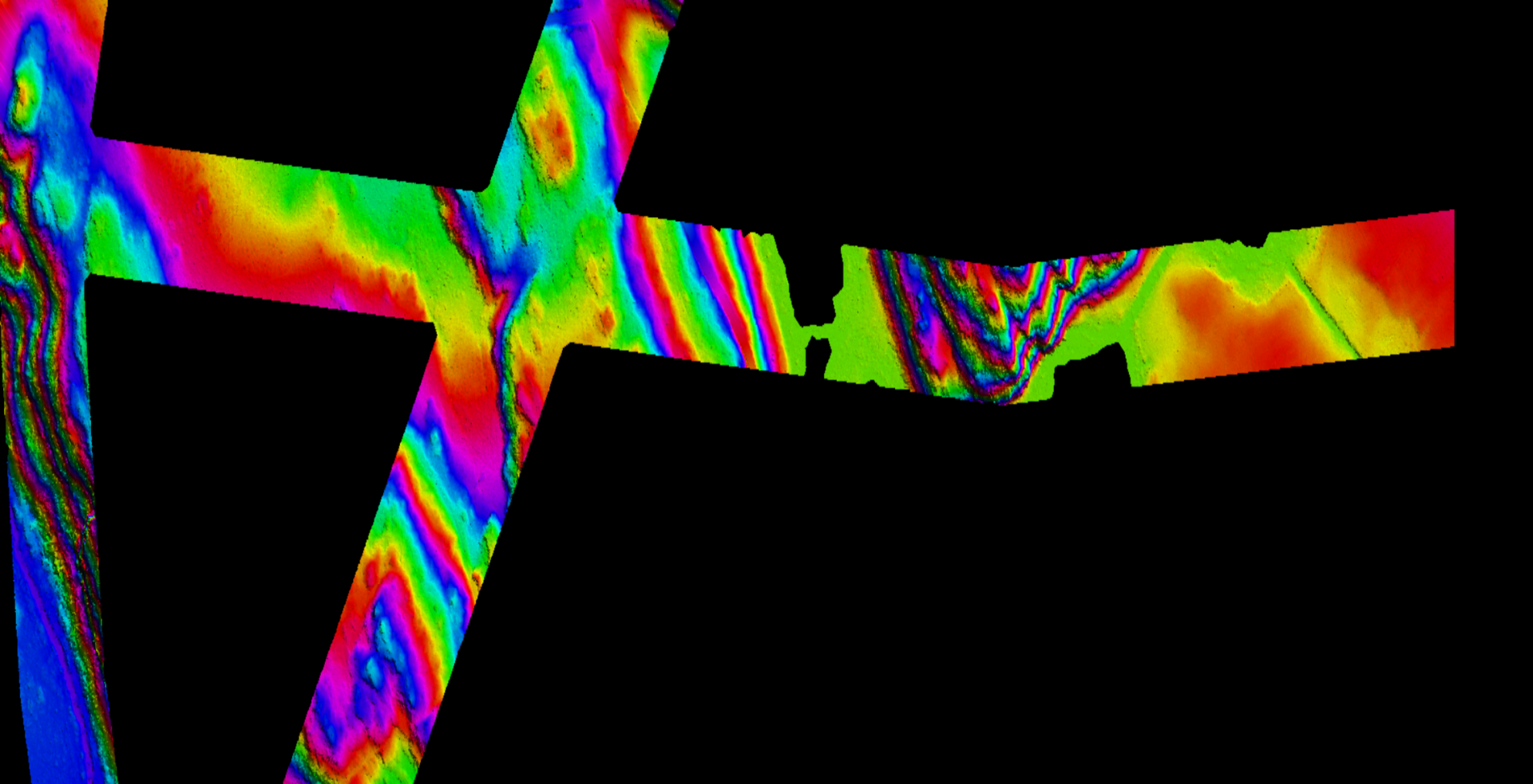

The project utilized Terrasolid and Arcpro for classification and extraction, employing two teams working almost in parallel to meet the client’s extremely tight deadlines. Macros were used to enhance classification quality. The workflow involved one team focusing on classification while another started vectorization based on the classified data post-macro processing. Vectorization, particularly of wires and insulators, was more time-consuming than anticipated due to the high quality and connectivity requirements of 3D objects and their topology.

Conclusion.
The project successfully delivered a high-quality terrain model, enabling accurate contour line construction, classified power lines from which high-quality vector data were extracted, and segmented into 16 different layers according to the object and voltage. The project covered 1744 kilometers within February 2024.
Unique Aspects. The linear vectorization of insulators was uniquely challenging, requiring significant time due to their prevalence on nearly every pole. Despite the project’s urgent timelines, which precluded automation beyond effective organization, the technical leads have identified potential automation strategies for future implementation. This experience has been invaluable, and the team is seeking new engineering partnerships to collaboratively find efficient solutions for similar challenges without bureaucratic delays.
📞 We have the capacity to process over 2,000 km monthly. We’re continuously open to new projects and opportunities. Please consider sending us a pilot project to evaluate the quality of our services. Don’t hesitate to drop us a message right here or book the meeting on Linkedin.